




Open Middle Problems
Created by Robert Kaplinski, Open Middle Problems usually have:
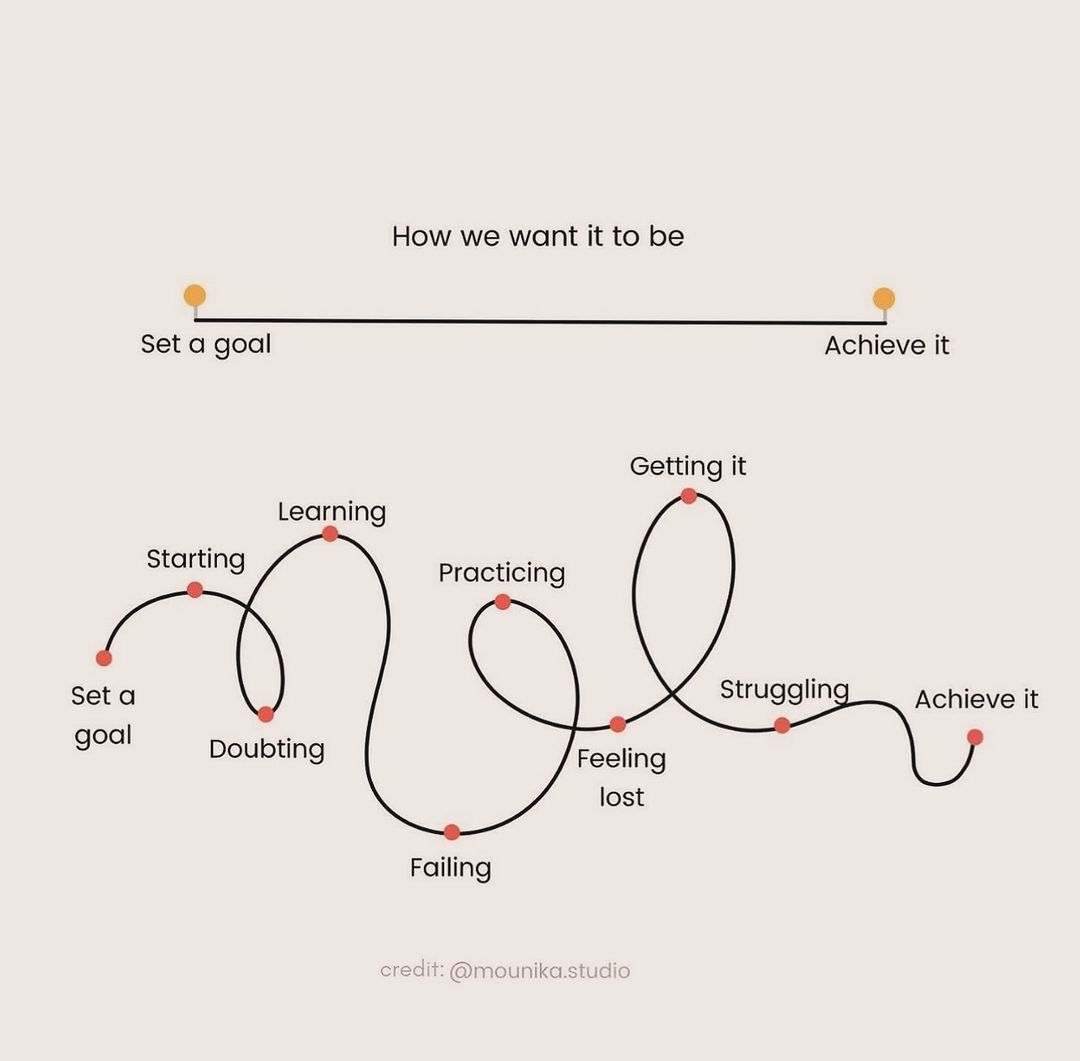 a “closed beginning” meaning that they all start with the same initial problem.
a “closed end” meaning that although some problems may have multiple possible solutions, all open middle problems can be solved.
an “open middle” meaning that there are multiple ways to approach and ultimately solve the problem.
The messy middle is an important stage. It allows a chance to clarify and correct misunderstandings.
 Just like other "Thinking Tasks", it is a good idea to recognize and discuss solutions. This is a chance to "clean up" and consolidate ideas, highlight productive strategies, and reinforce common language and notation.
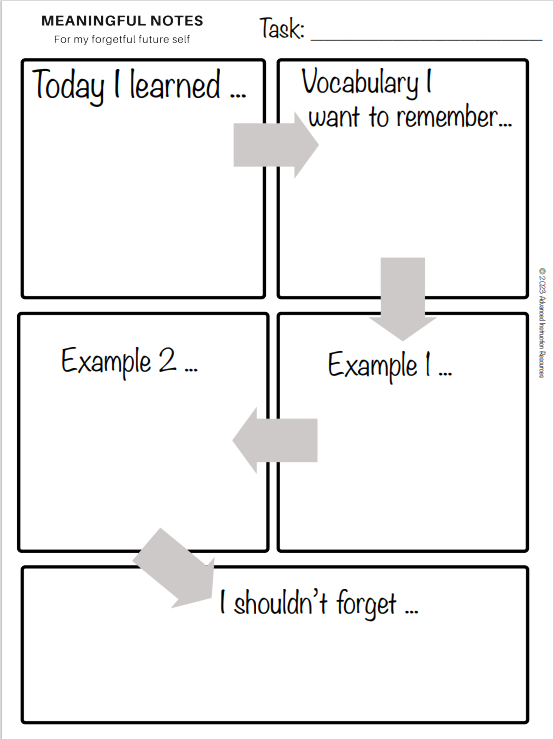
One way to help students to create a record of the "closed end" is by using a note taking template. These "meaningful notes" can be used to recall key vocabulary and strategies that are helpful when solving similar problems.
Thinking Classrooms Meaning Notes Template
Several Open Middle problems are included below. For more examples, sorted by grade and content area, go to https://www.openmiddle.com (Open Middle - Challenging math problems worth solving)
Printable Number Tiles for Open Middle Problems
Printable PDF with the digits 0 to 9
Printable PDF with the integers -9 to 9
Grade K/1: Subitizing and Addition
Grade 2: Sum to 100
Grade 3 : Sum to 1000
Grade 4/5: Benchmark Fractions
Grade 6: Operations
Grade 7: Equivalent Ratios
Grade 7: Fraction Operations
Grade 8: Similar Shapes
Grade 8: Percentage
Grade 9: Perfect Squares

 Google Translate